


Russia continued indiscriminate attacks on heavily populated areas, targeted critical civilian infrastructure and appeared to deliberately target civilians. Ukrainian prisoners of war and civilian detainees were subjected to torture, enforced disappearance and incommunicado detention in Russian-occupied territories, where repression of non-Russian identities continued. Investigative journalists reported being subjected to targeted smear campaigns. The right to freedom of religion was restricted. Conscientious objectors were denied alternative service and prosecuted. Prosecution for collaboration raised fair trial concerns.
Background
Russia continued to pursue further territorial gains and increased the intensity and scale of deep strikes across Ukraine. The war of attrition took a considerable toll on both sides. Ukraine developed, produced and deployed innovative military hardware and tactics and sought to reduce its huge dependence on foreign-supplied weapons systems and ammunition. Its negotiators resisted US pressure to make territorial and other concessions as part of a peace deal with Russia.
The number of civilian casualties remained high with a total of 14,999 killed and 40,601 injured between 24 February 2022 and September 2025. June and July were the deadliest months on record for the civilian population of Ukraine since April 2022.
The economy remained fragile and deeply dependent on foreign financing and other aid. The authorities’ attempts to weaken anti-corruption institutions through new legislation were thwarted by popular protests. While severe energy shortages escalated, Ukraine’s National Anti-Corruption Bureau and a specialized prosecutor’s office uncovered an alleged kickback scheme in the energy sector, leading to high-level arrests and resignations. EU membership remained a priority, while the prospect of NATO membership appeared increasingly uncertain.
Violations of international humanitarian law
Unlawful attacks
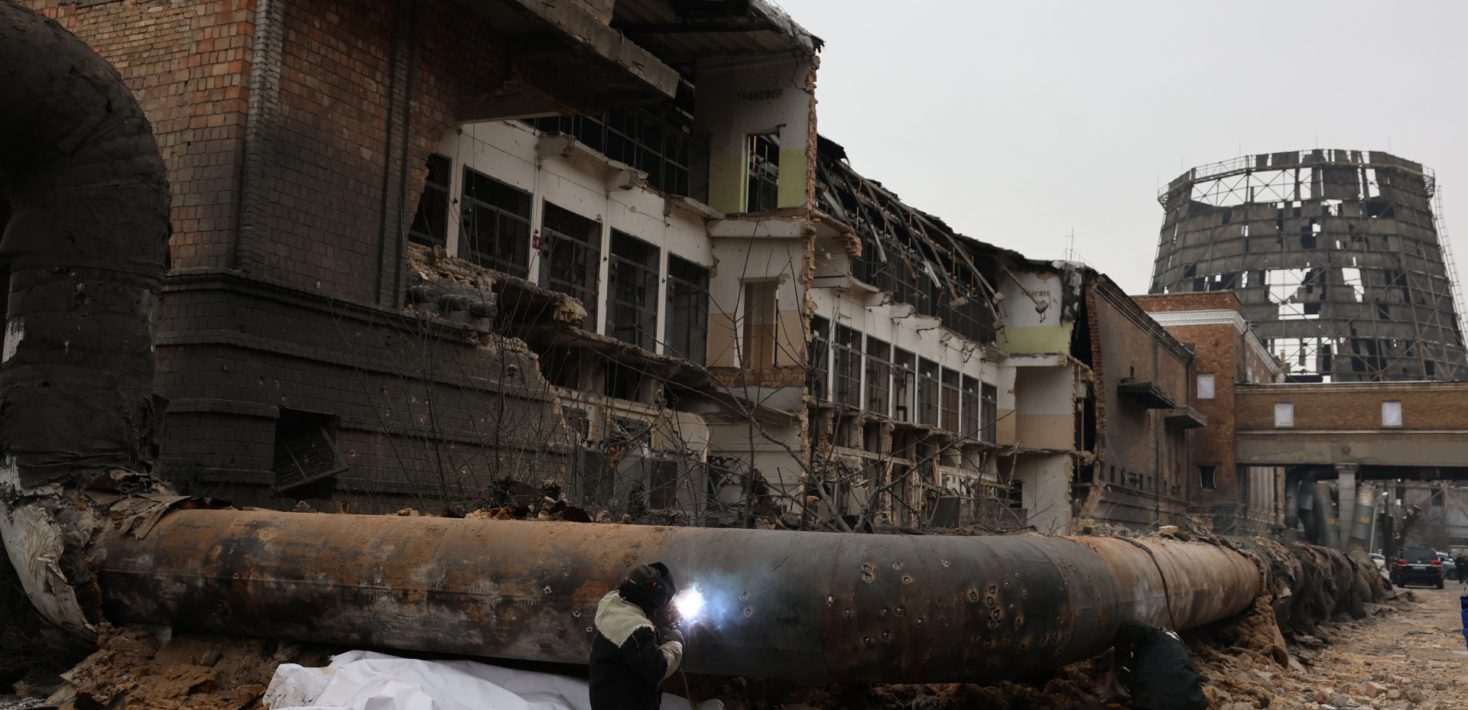
Intensifying Russian aerial attacks across Ukraine included indiscriminate strikes inside heavily populated areas, targeting of critical civilian infrastructure and the targeting of civilians, which amounted to war crimes. The UN-established Independent International Commission of Inquiry on Ukraine concluded that Russian drone attacks targeting civilians in the Kherson region constituted the crime against humanity of murder and war crimes.
The UN Human Rights Monitoring Mission in Ukraine reported that most civilian casualties occurred near the frontline. In December, they comprised 67% of the total, with nearly 30% caused by First Person View (FPV) drone attacks. With the advent of colder months, Russia targeted energy infrastructure almost daily. By November, official figures suggested that energy generation was less than half its pre-February 2022 level. Millions endured heating and power shortages, with electricity on some days limited to three hours a day as temperatures dropped. In response, from September Ukraine launched reciprocal attacks on energy infrastructures inside Russia, causing temporary local power blackouts.
According to the UN, 472 civilians were killed and 1,188 injured by mines or other explosives between February 2022 and December 2025.
Extrajudicial executions
According to media reports, as of 10 December the Office of the Prosecutor General of Ukraine had documented 322 cases in which Ukrainian prisoners of war were executed by Russian forces since the start of the full-scale war. In August, Vladyslav Nahornyi was captured near the city of Pokrovsk in Donetsk region. He told Ukrainian media that he and seven other Ukrainian prisoners of war were tortured by Russian forces, who then killed the others. Despite having his throat slit, he survived and crawled back to a Ukrainian position.
Torture and other ill-treatment
Russia continued to deny any international monitors access to prisoners of war held in occupied Ukraine and elsewhere, and systematically subjected such prisoners to enforced disappearance and incommunicado detention (see Russia entry). Prisoners released through exchanges testified to widespread torture and other ill-treatment, including denial of medical care and malnutrition, and regular deaths. One prisoner, who had spent 33 months in Russian captivity, weighed only 40kg when Amnesty International interviewed him weeks after his release in January. Another former prisoner died of poor health in November, aged 46, six months after his release.
Russian prisoners of war held by Ukraine who were visited by Amnesty International delegates in April and September, in two prisoner camps, described incidents of ill-treatment at the point of capture. There were also minor complaints about their treatment in the camps where they were subsequently held; for example, over the limited range of food in the camp’s store. Non-Russian captives reported racist slurs by fellow prisoners and guards.
Children’s rights
The number of children killed in Russian strikes increased by more than 200% between March and May compared to the previous quarter, according to the UN.
Children were reportedly clandestinely recruited online for attacks on military objects, sabotage or information gathering. At least two boys reportedly died and one was injured while undertaking such missions. In addition, according to the UN, as of May, 91 boys and 12 girls were in detention. Forty-two children were convicted of terrorism, spying and sabotage-related offences, leading to the incarceration of at least seven children.
Right to a healthy environment
In February, conflict-related emissions since the beginning of the full-scale invasion were said to have reached the equivalent of 230 metric tons of CO2. Russia’s ongoing war of aggression continued to cause major environmental damage and risk environmental calamities. On 14 February, Ukrainian authorities reported a Russian overnight drone strike on the protective shelter over Chornobyl’s damaged reactor, raising the risk of radioactive leakage.
In September, the International Atomic Energy Agency expressed concern that their seven indispensable pillars of nuclear safety were being compromised at the Russian-occupied Zaporizhzhia nuclear power plant.
According to media reports, on 8 November Russian drones destroyed Ukraine’s first industrial biomass power plant, which had been a symbol of Ukraine’s push for green energy.